

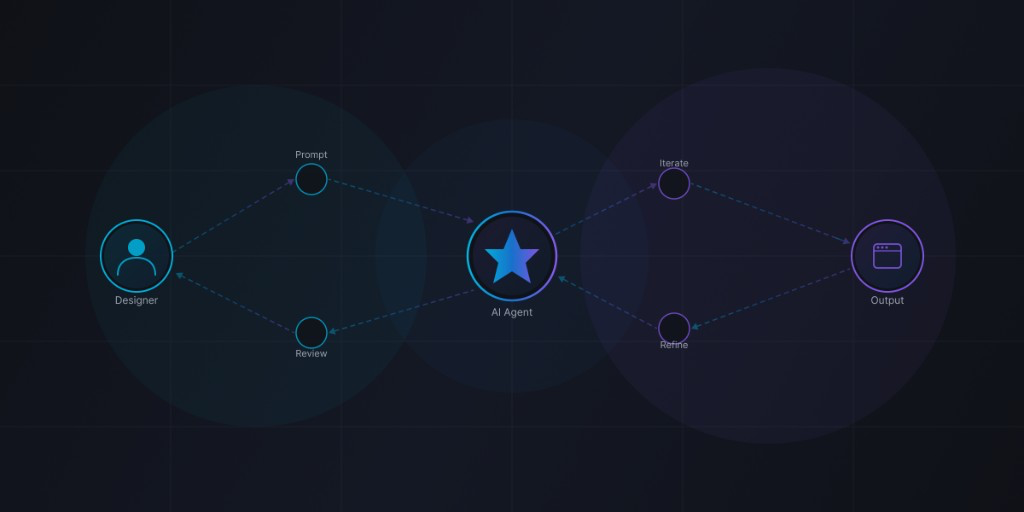
As part of an emerging tech group, our mission is to explore the "what's next" for Cisco and the broader industry. This requires more than just curiosity; it demands that we actively step outside the comfort zones of known processes. We are living in an incredibly stimulating historical moment where previous knowledge barriers are being lowered, thanks to agent assistants that translate natural language intents into something tangible — from writing and design to complex development.
However, all that glitters is not gold, at least not yet. So, how do we take the best and leave the rest? Here are some reflections on the current state of AI-augmented design.
The Problem of "Plausible Noise"
The multiplication of interface generation tools has made it possible to create nice-looking UIs that serve as excellent conversation starters. The problem arises when we go deeper into the content. Very often, these tools take the liberty of adding unrequested content to fill the space.
Replacing the classic "lorem ipsum" with plausible-looking, consistent content can be dangerous; it distracts from the core design goal and confuses our audiences. When content hierarchy is sacrificed for visual "noise," the interface becomes a generic, unbranded shell.
It is a dangerous mix: pleasant to the eye, but fundamentally hollow. AI tools are precious, but Human-in-the-Loop (HITL) guidance is as critical as mentoring a junior designer. Sometimes, the effort required to instruct an AI to achieve a specific vision is greater than simply sketching the idea ourselves.
Starting a conversation, guiding team discussions, and exploring initial ideas and styles.
High-fidelity production-ready assets or final prototypes without rigorous review.
The "Engineer Pal"
One shift we have found extremely useful in our roles is the reduction of technical barriers, which speeds up our process of using and reviewing the technical solutions we produce. At Cisco Outshift, we have been exploring the Internet of Agents and the Internet of Cognition. Rather than traditional SaaS interfaces, these solutions live primarily in GitHub repositories, sometimes using UIs to facilitate usage and demo their features.
Previously, an AI-unaugmented design team would have had to ask an engineer for a demo, wait for assistance with installation, or spend a significant amount of time figuring out how to run the software locally. Today, coding assistants allow us to bridge that gap.
For projects like the AGNTCY directory GUI, we were able to collaborate with the team to impact the look and feel, aligning it with our branding and refining the content for a smoother experience. We bypassed static mockups entirely, relying on assisted frontend development.
Similarly, on the Internet of Cognition CASA project, we were able to review the first draft of the UI, propose information architecture and flow improvements, and share an updated look and feel directly in code. No mockups — just sketching and sharing a working version with the frontend team, complete with interaction details, avoiding the tedious work of documenting every state.
Case Study: The CASA Project
At Outshift, we are actively exploring and shaping the Internet of Cognition — a paradigm where agents collaborate by sharing context, intent, and memory. Building on our previous work with AGNTCY regarding agent identities, our team has begun exploring Zero Trust principles in multi-agentic environments. This led to the development of CASA (Continuous Agent Semantic Authorization), an intent-scoped authorization system for Kubernetes multi-agent systems, enforced at the network layer.
Our projects are ambitious, fast-paced, and currently live primarily in GitHub repositories. In the context of CASA, we needed to design a UI that allows users to monitor and manage authorizations at a granular level. As remote designers working with sometimes local engineering teams, we needed to catch up quickly and contribute meaningfully, despite tight deadlines.
The Workflow Shift
- Local Environment Independence. We asked the AI coding assistant to run the application locally using demo data. This allowed us to navigate and review the first draft of the interface independently, removing the logistics bottleneck entirely.
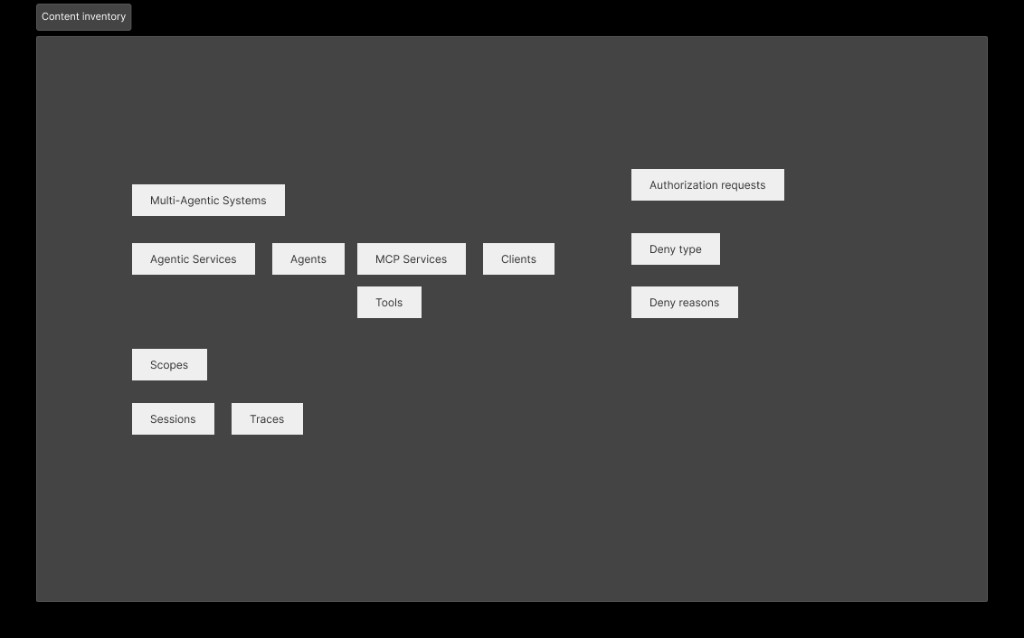
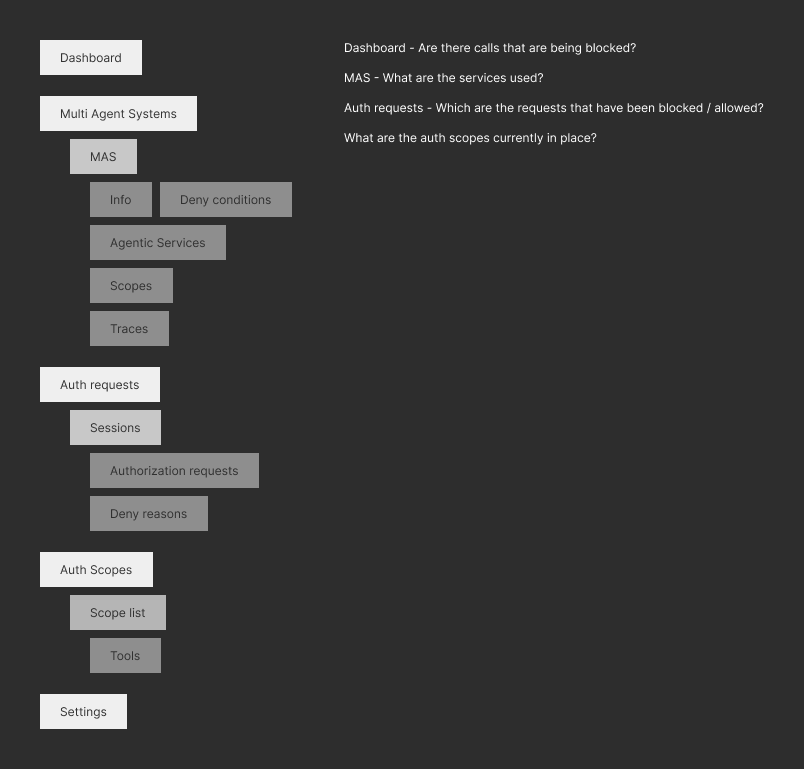
- Content Inventory & Architecture. We conducted a thorough content inventory to understand the underlying intentions of the interface. We proposed a new information architecture and navigation flow, ensuring that the most relevant content was accessible in a single click.
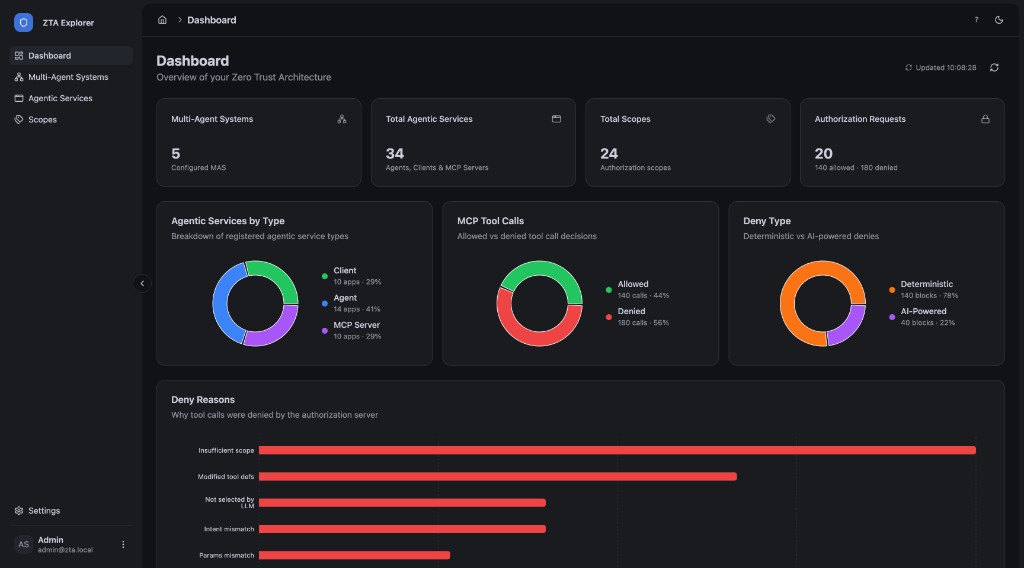
- Branding & Visual Refinement. When the look and feel felt too generic, we asked the agent to develop a color theme for our framework, providing visual and code references to ensure consistency.
- Iterative Development. With the architecture and branding defined, we asked the agent to update the UI. After a few hundred iterations, we reached a version that aligned perfectly with our design principles.
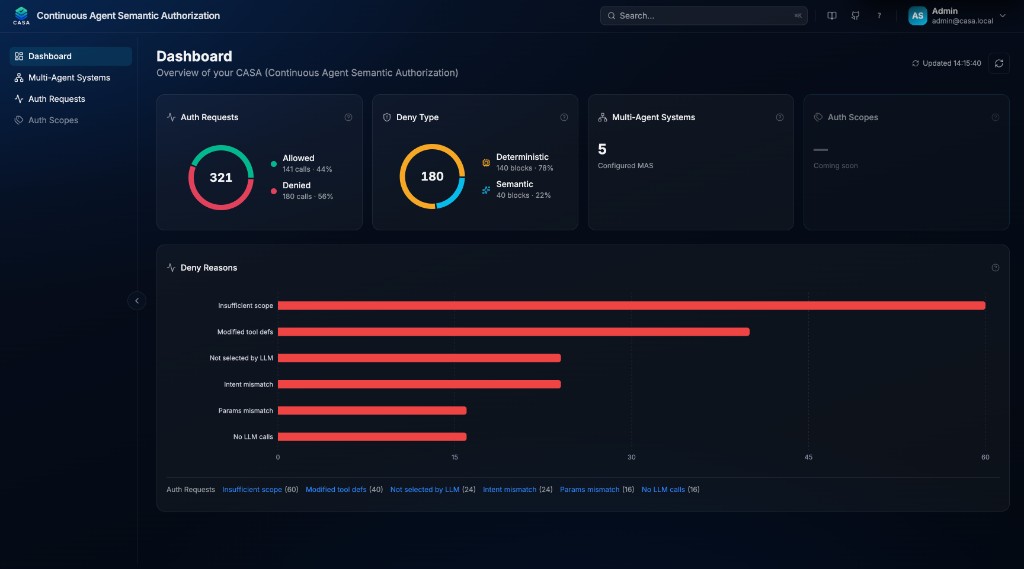
Results: Record-Breaking Fidelity
We documented the recommendations, recorded a short demo video to illustrate the new navigation and interactions, and pushed the updates to our GitHub repository.
We are currently at a "0–1" prototype stage. We don't expect this to function as a final product yet, but we are working with educated hypotheses that we plan to test through user interviews. The team reviewed the proposal, and the frontend engineer was able to implement the updates immediately. The result was a high-fidelity experience where interactions could be tested in real-time. There were no "blurred lines" — everything was clearly defined in the code.
The Timeline
- 1Local review of the existing interface
- 2Suggested architecture and branding updates
- 3Implementation for collaboration
- 4Team review
- 5Final implementation
- 6One final round of review
All of this occurred within a single week. In my experience, this is record time. The level of fine-tuning achieved is unprecedented, which is extremely satisfying from a designer's perspective.
Reflections on the Future of Design
As AI capabilities continue to expand, every role is being reshaped, and we must learn to discern what to adopt and what to leave behind. From a product design perspective, the potential is immense: the design bottlenecks caused by time-consuming artifact production are finally becoming a thing of the past. We are reducing the burden of tedious state documentation and design system maintenance, allowing design reflections to be explored and tested with unprecedented speed.
While every software platform is racing to integrate AI, the end-to-end "design-to-engineering" workflow hasn't been 100% cracked yet. However, we are witnessing a fascinating convergence. Design is no longer confined to a silo; we are now collaborating directly in tools like GitHub, pushing code generated by agents, and proposing frontend solutions that serve as living design references for our engineering counterparts.
Our current stack—Figma with generative plugins, AI-powered IDE assistants, and sharing generated code on GitHub—is pulling us closer to the engineering space than ever before.
Will we eventually settle into defined, standardized workflows, or will the exponential growth of opportunities continue at this current velocity, demanding a permanent state of fast-paced learning? We don't have the answer yet. For now, the most valuable skill is the ability to keep experimenting, learning, and contributing while enjoying the ride. We are building the future as we go, and that is an incredible place to be.
Back to Blog